
At first glance, brittle seems simple. Sugar. Nuts. Heat. Crunch.
But anyone who has tasted both mass-produced brittle and a carefully crafted artisan version knows they are not the same experience. One is sweet and crunchy. The other is layered, balanced, and memorable.
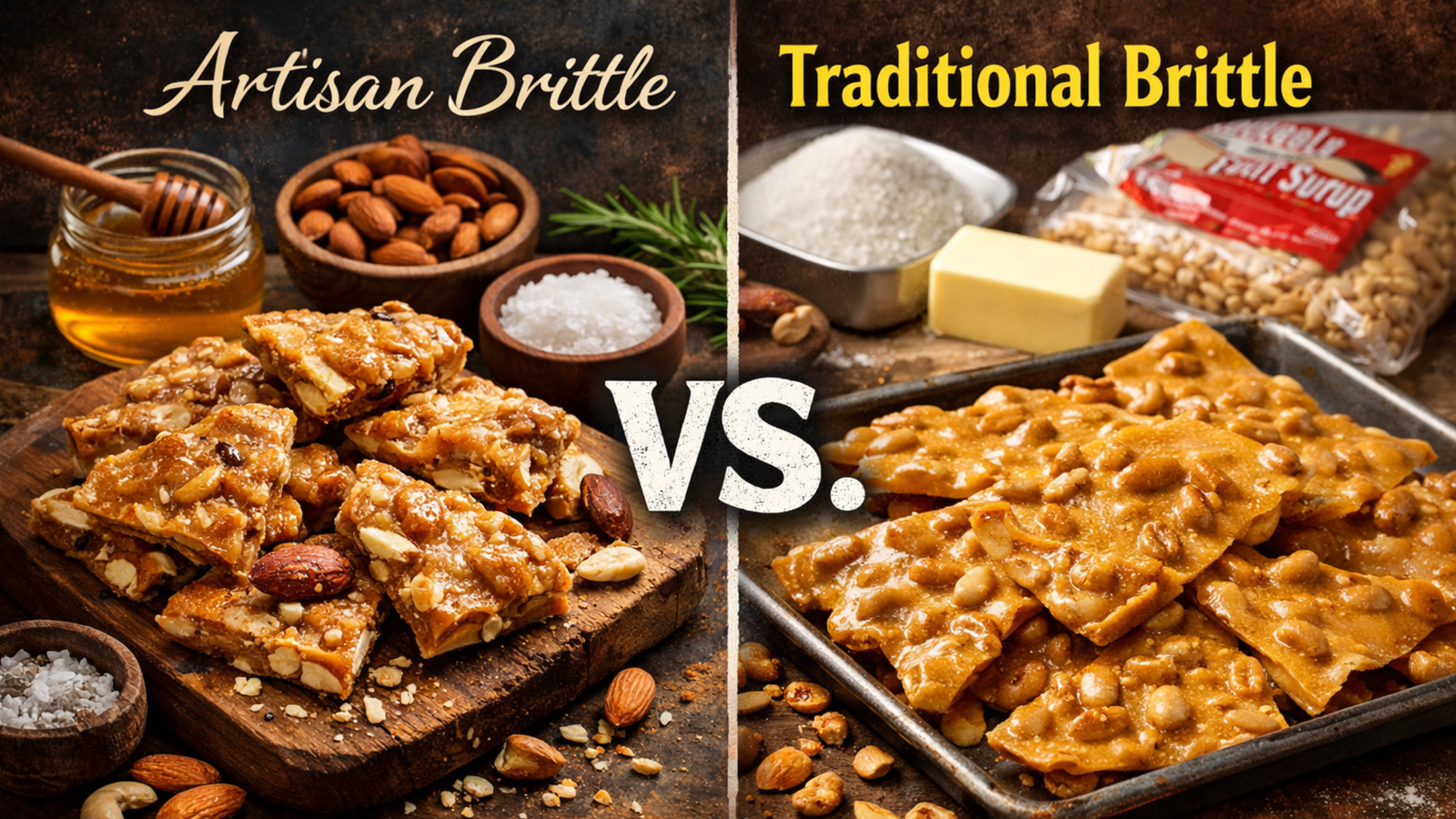
This guide breaks down the real differences between traditional brittle and artisan brittle, from ingredients and texture to flavor philosophy and craftsmanship. Along the way, we’ll show how modern artisan makers like Brittle-Brittle® have redefined what premium brittle can be, and how to choose the right style for your taste, gifting needs, and expectations.

Brittle is a hard-crack candy made by caramelizing sugar and suspending nuts throughout the mixture before it cools and sets into thin, glass-like sheets. Once hardened, it’s broken into irregular pieces, part of its rustic charm.
Classic brittle typically includes:
Sugar (or corn syrup)
Butter (or honey)
Nuts (often peanuts)
Baking soda (for aeration)
Salt
The science matters. Cooking sugar to the hard crack stage (around 300°F) creates brittle’s signature snap, while baking soda introduces air bubbles that make it shatter instead of chew.
Where brittle diverges, and where quality shows up, is in ingredient choices, ratios, cooking method, and intent.
 Candies resembling brittle have existed for centuries. Early versions appeared in the Middle East and Asia, often made with honey and nuts like sesame or almonds. These were practical sweets, energy-dense, shelf-stable, and celebratory.
In the U.S., peanut brittle gained popularity in the 19th century, especially in the South. Legend credits an accidental swap of baking soda for cream of tartar, resulting in a lighter, crisper candy than traditional toffee.
For decades, brittle was a home-kitchen or small-confectionery staple. But as candy production industrialized, brittle became cheaper, faster, and more standardized, often at the expense of flavor and texture.
Artisan brittle is, in many ways, a return to those earlier roots.
 How Traditional Brittle Is Made
Traditional brittle focuses on speed and consistency:
Refined sugar or corn syrup
Continuous kettles or sheeted machines
Minimal ingredient variation
The goal is reliability and cost efficiency.
Sweet-first
Straightforward caramel notes
Peanut-forward but sugar-dominant
Familiar and nostalgic
This is the brittle many people grew up with—often homemade or purchased during holidays.
Traditional peanut brittle is:
Thin and airy
Very crisp
Highly shatter-prone
When done well, it’s satisfying. When rushed or overcooked, it can be overly hard, sticky, or flat in flavor.

Artisan brittle doesn’t reinvent the candy, it refines it.
True artisan brittle is defined by:
Small-batch production
Intentional ingredient sourcing
Nut-forward ratios
Hands-on cooking and pouring
Flavor development over speed
Brands like Brittle-Brittle® approach brittle the way chefs approach caramel: with precision, patience, and purpose.

One of the biggest differences between artisan and traditional brittle is what goes into the pan.
Artisan producers often prioritize:
Natural sweeteners (like honey)
Fresh, high-quality nuts
Real butter
Minimal, recognizable ingredients
Honey-based recipes, used by Brittle-Brittle®, bring deeper caramel notes, smoother sweetness, and a more rounded finish than refined sugar alone. They also influence texture, creating a cleaner snap and less cloying bite.
This ingredient-first approach is why artisan brittle tastes richer without being heavier.

Crunch is brittle’s calling card, but the quality of that crunch varies.
Traditional brittle: thin, airy, sharp snap
Artisan brittle: slightly denser, more controlled break, cleaner bite
Artisan brittle often avoids the tooth-jarring hardness associated with mass production. Instead, it aims for balance, crisp without being aggressive, crunchy without being brittle-for-the-sake-of-it.
This textural refinement is especially noticeable in nut-forward varieties like almond or cashew brittle, which Brittle-Brittle® is known for.

Artisan brittle allows room for creativity, but the best versions don’t rely on novelty alone.
Instead of “flavor overload,” premium brittle focuses on:
Complementary spices
Savory-sweet balance
Chocolate pairings
Seasonal nut variations
Brittle-Brittle® exemplifies this approach by offering flavors that feel elevated but intentional, never gimmicky, never artificial.
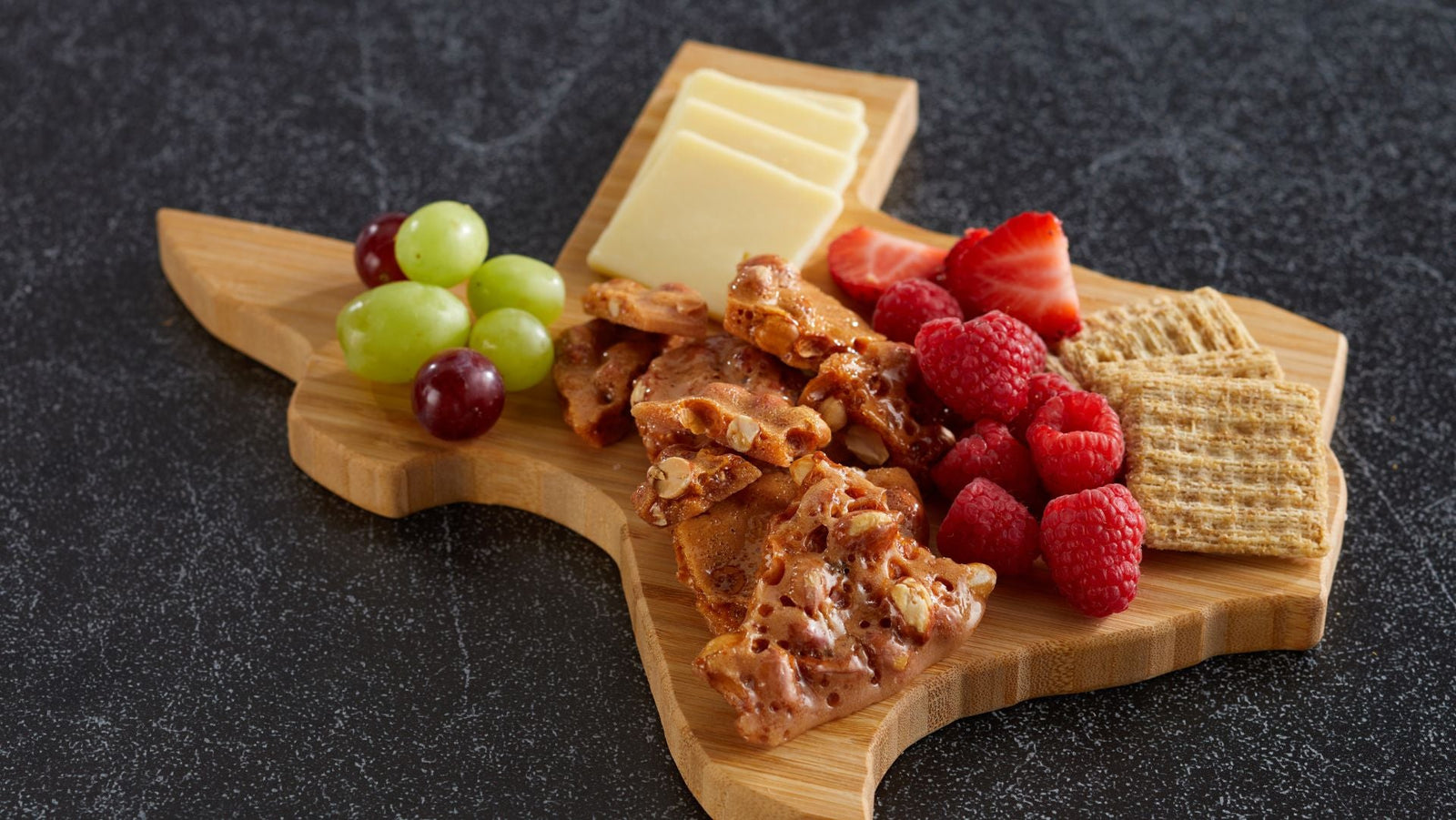
This makes artisan brittle more versatile: as a gift, dessert topping, cheese board accent, or coffee pairing.
 Traditional brittle is often sold as a commodity product, functional packaging, minimal storytelling.
Artisan brittle treats presentation as part of the experience:
Gift-ready packaging
Seasonal collections
Curated assortments
Visual appeal for entertaining
This is where artisan brittle clearly moves from “candy” into gourmet confectionery, and why it performs so well for gifting.
 Artisan brittle typically costs more. That’s not accidental.
You’re paying for:
Smaller batches
Manual labor
Lower waste tolerance
Quality control
When broken down by ounce and experience, many customers find artisan brittle offers significantly more value per bite, especially when compared to mass-produced options that rely on sugar volume over flavor depth.

Choose traditional brittle if:
You love classic peanut brittle
Nostalgia is the main appeal
You want a budget-friendly candy
Choose artisan brittle if:
You value ingredient quality
You enjoy nuanced flavors
You want a cleaner, more refined crunch
You’re buying a gift or entertaining
If you’ve never tried artisan brittle, starting with a trusted maker like Brittle-Brittle® is often eye-opening.
Brittle-Brittle® sits at the intersection of tradition and innovation:
Rooted in classic brittle technique
Elevated through honey-based recipes
Crafted in small batches
Focused on flavor, texture, and integrity
This philosophy is why Brittle-Brittle® serves as a natural hub for exploring:
Nut variety guides
Creative brittle recipes
Gift-ready confectionery
Brittle may look simple, but great brittle is anything but accidental.
Whether you lean toward the nostalgia of traditional peanut brittle or the refined experience of artisan versions, understanding the differences helps you choose intentionally—and enjoy every bite more.
If you’re ready to explore what premium brittle can truly taste like, Brittle-Brittle® is an ideal place to start.