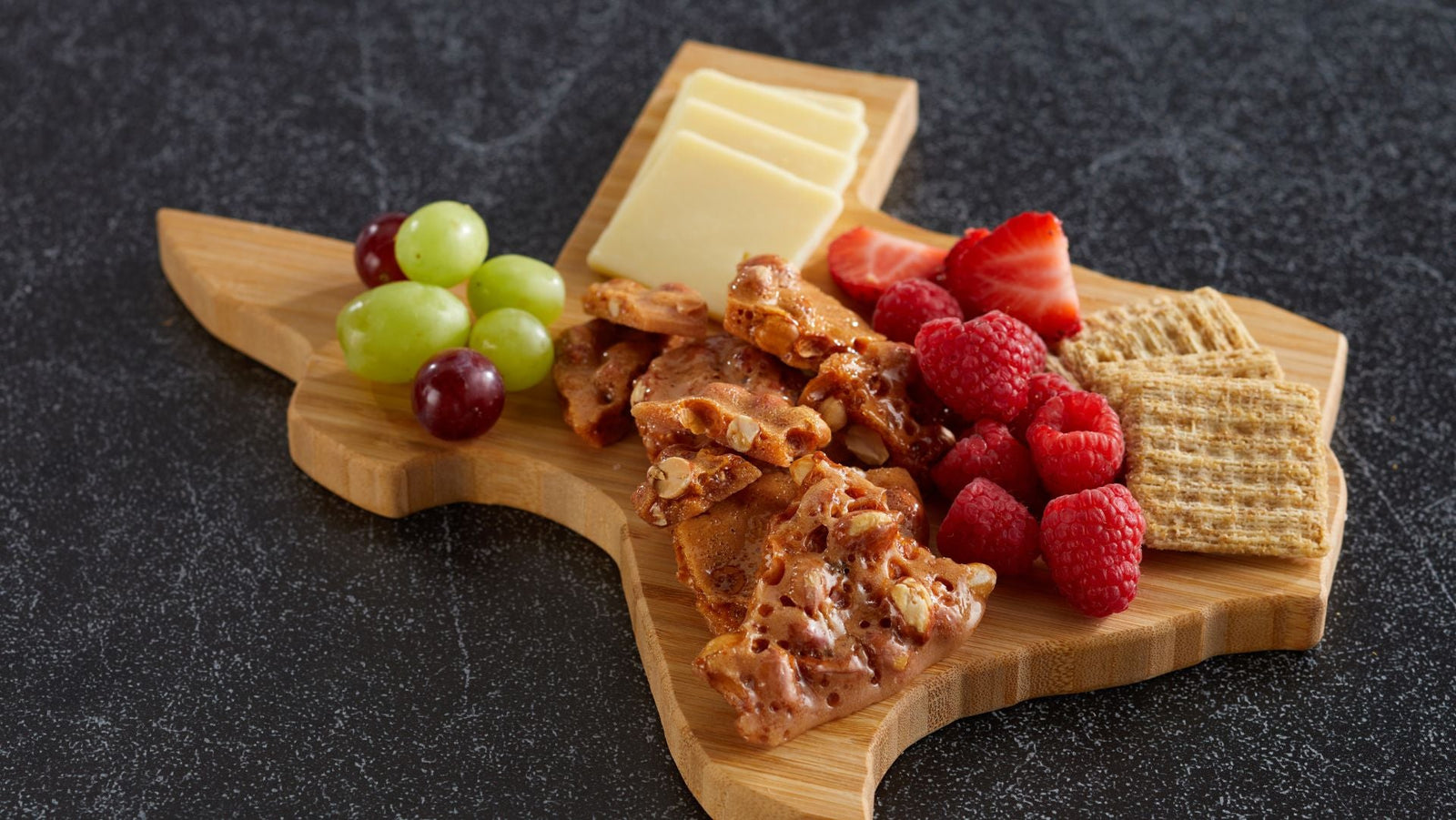
Snack boards have evolved far beyond cheese and crackers. Today’s boards are intentional, layered, and designed to balance flavor, texture, and visual appeal. They’re less about filling space and more about creating moments guests remember.
One ingredient is quietly earning its place on both sweet and savory boards: brittle.
At first glance, brittle may seem like it belongs strictly on dessert spreads. But when chosen thoughtfully, premium brittle becomes one of the most versatile elements on the board—adding crunch, contrast, and caramelized depth that bridges sweet and savory beautifully.
This guide breaks down how to use brittle on sweet vs. savory snack boards, which types work best in each setting, and why artisan options like Brittle-Brittle® bring a level of balance and refinement that mass-market brittle simply can’t.
 Great snack boards succeed because they offer contrast. Soft against crisp. Salty against sweet. Rich against fresh.
Brittle delivers something few board components can match:
a clean, dramatic crunch paired with caramelized sweetness and roasted nut depth.
Unlike cookies or candy bars, brittle:
Breaks into irregular, rustic pieces
Balances sweetness with salt and toasted nuts
Holds its structure next to creamy cheeses and spreads
High-quality artisan brittle is especially well-suited for entertaining because it’s:
Nut-forward rather than sugar-heavy
Crisp without being tooth-jarring
Stable enough to sit out without getting sticky
That makes brittle less of a “dessert add-on” and more of a flavor bridge—connecting sweet and savory elements naturally.
Sweet Snack Boards: Where Brittle Feels Familiar (But Better)
Sweet boards are brittle’s most familiar home, but premium brittle offers far more than nostalgia.
Sweet boards typically include:
Chocolates and confections
Fresh or dried fruits
Cookies or pastries
Nuts and spreads
Honey or caramel elements
The goal is indulgence without overload.
On a sweet board, brittle adds:
Crunch alongside soft or chewy items
Caramelized depth that complements chocolate
Nutty richness that balances fruit acidity
Classic peanut brittle
Almond or cashew brittle
Honey-based brittle with warm caramel notes
Brittle with subtle chocolate pairings
Artisan brittle like Brittle-Brittle® works especially well here because it delivers sweetness with restraint. The result is a board that feels layered rather than one-note.
Brittle + dark chocolate squares
Brittle + fresh berries or apple slices
Brittle + mascarpone or lightly sweetened cream cheese
Brittle + honeycomb or soft caramel
The key is balance: brittle should enhance the board, not dominate it.
Savory Snack Boards: Where Brittle Becomes Unexpected
This is where brittle truly shines.
Savory boards thrive on contrast—salt, fat, acidity, and crunch. When used intentionally, brittle brings all four.
Savory boards often feature:
A mix of soft and aged cheeses
Charcuterie
Olives or pickled elements
Crackers or bread
Nuts and spreads
Brittle introduces:
Sweet-salty contrast
Roasted nut complexity
A crisp bite that cuts through rich cheeses
Used sparingly, brittle plays the same role as fig jam or honey—but with texture.
Peanut brittle with sea salt
Almond or cashew brittle
Less-sweet, nut-forward varieties
Honey-based brittle with restrained caramel notes
Artisan brittle—especially from Brittle-Brittle®—is better suited for savory boards because it emphasizes nut quality and balance over sugar.
Brittle + aged cheddar or gouda
Brittle + blue cheese or gorgonzola
Brittle + prosciutto or salami
Brittle + tangy goat cheese
Here, brittle becomes a conversation piece, not a novelty.
The difference isn’t just where you place brittle—it’s which brittle you choose and how you portion it.
Lean into caramel and honey notes
Pair with fruit and chocolate
Slightly larger brittle pieces work well
Choose nut-forward, lower-sugar brittle
Pair with bold, salty cheeses
Break brittle into smaller shards for subtlety
In both cases, quality matters. Mass-produced brittle can feel overly sweet and flat, while artisan brittle integrates seamlessly into curated spreads.
This distinction mirrors the broader difference between artisan brittle vs. traditional brittle, where ingredient quality and process directly affect flavor and versatility.
 Brittle’s irregular shape is part of its charm—but presentation still matters.
Best ways to serve brittle on boards:
Use small bowls or ramekins
Scatter a few pieces near complementary items
Break into varied sizes for visual interest
Avoid placing brittle directly on soft or moist items, which can compromise crunch over time.
 Not all brittle performs well outside the candy bowl.
Artisan brittle like Brittle-Brittle® is typically:
More stable in texture
Less sticky over time
Better balanced in sweetness
Visually refined for serving
That makes it ideal for:
Dinner parties
Holiday spreads
Wine-and-cheese nights
Gift-ready snack boards
It’s the difference between a filler item and a thoughtfully chosen component.
 For a more elevated approach, try building part of your board around brittle.
Start with:
One standout brittle variety
Two complementary cheeses
One fresh or acidic element
One savory anchor (meat or olives)
This method ensures brittle feels intentional—never accidental.
Brittle is no longer just a standalone candy. When chosen carefully, it becomes a versatile, refined addition to both sweet and savory snack boards.
Whether you’re assembling a dessert spread or hosting a cheese night, premium artisan brittle adds texture, contrast, and polish that guests notice immediately.
If you’re looking for brittle crafted with balance, quality, and entertaining in mind, Brittle-Brittle® is an ideal choice.